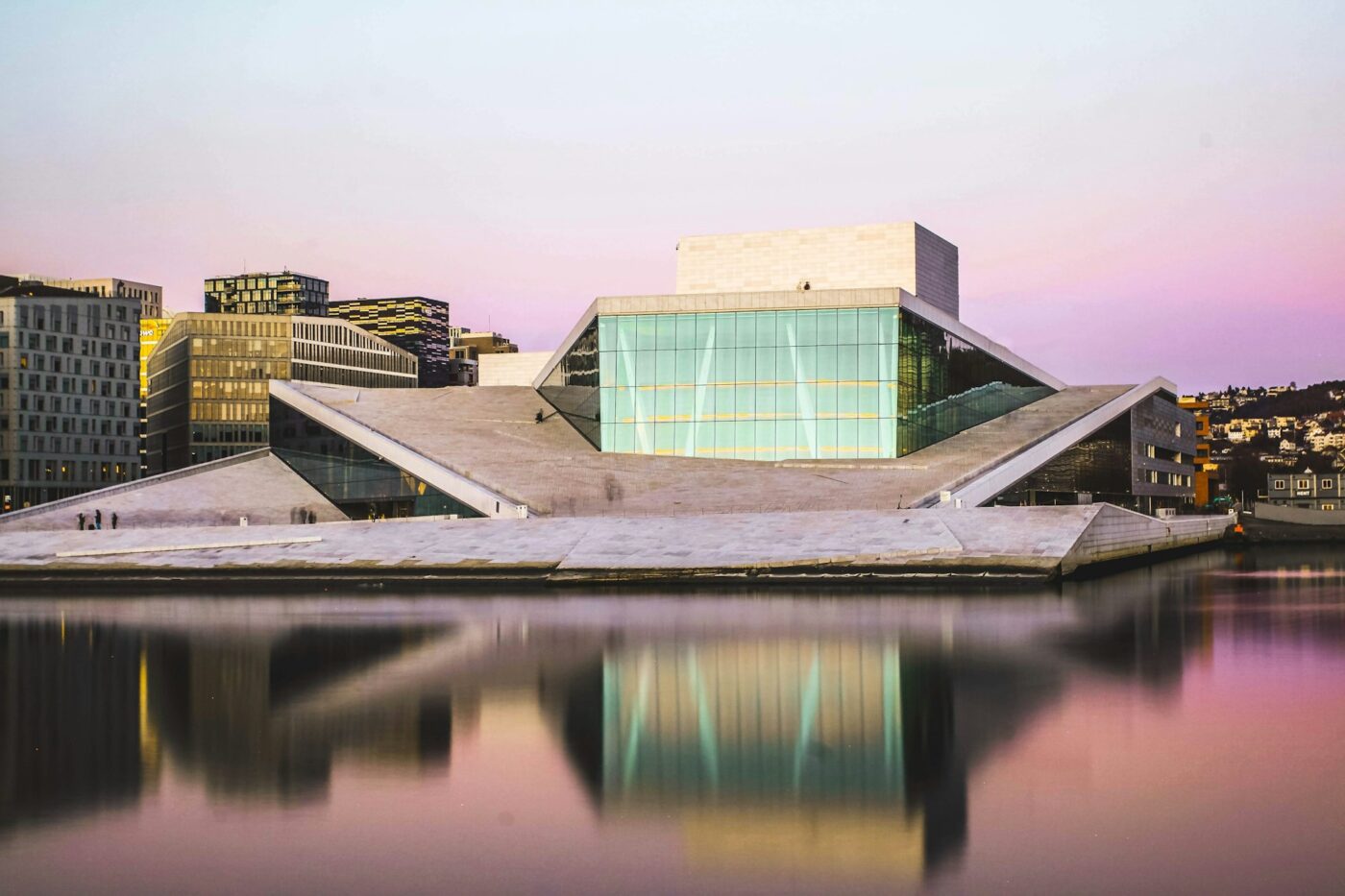
The fjords and northern lights of Norway attract millions of tourists each year. Oslo is much more than a gateway to all of this splendor. Norway’s Viking, maritime and artist cultures are deeply rooted in the heart of Oslo’s natural beauty. Where else can you see a modern, elegant almost iceberg-like Opera House reflecting on waters of a fjord? I visited this incredible seaport many times as a tourist and Acupuncturist-at-Sea. Read on and discover top Oslo Norway attractions and why you should visit.
Oslo is the gateway to Norway. It’s located in southeastern Norway at the head of the Oslofjord. The city was founded at the end of the Viking Age in 1040. Oslo is a natural paradise with 40 islands, and 343 lakes, surrounded by mountains and lush green hills.
It’s known for its deep Viking and maritime culture going back more than 1,000 years. Before coming to Norway read up on their native artist legends because their legacies are omnipresent. Edvard Munch is a prolific painter most known for his paintings The Scream and Madonna. Henrik Ibsen is Oslo’s playwright, known for being one of the most prominent writers of the 19th century. He is called “the father of modern drama” with his lifeworks of theatrical realism in his plays.
Oslo is an interesting contrast of 1,000+ years of history alongside avant-garde architecture and art. This deep history is filled with Vikings, artists and maritime stories. Also, incredible natural beauty is a breathtaking part of the city with the fjord, sea, mountains and lakes nearby. Recently, Norway has become known for it’s culinary diversity with fresh seafood and international cuisine.
Get Oslo Pass, offering free access to 30 attractions and museums!
Top Oslo Norway Attractions
More than the Gateway to Norway

Karl Johans Gate Landmarks
The Karl Johans gate is the main car-free road connecting Oslo Central Station to the Royal Palace. In 1852, it was named after the former king. This bustling promenade offers historic landmarks, restaurants and shops. If you only have one day in Oslo, strolling the Karl Johans gate is a great thing to do.
The Tiger Sculpture

In front of Oslo Central Station is the bold, bronze statue known as the “Tiger.” It was created in 2000 to celebrate Oslo’s 1000th anniversary. It’s one of the most photographed icons in the city. Oslo became nicknamed “Tigerstaden” meaning “Tiger City” symbolizing the outstanding academics studied at the university.
Oslo Cathedral (Domkirken)
Dating back to the 17th century, this modest church is culturally important. The Oslo Cathedral is a prominent venue for Norwegian Government and Royal Family’s public events.
Stortinget
Since 1866, this is the Parliament Building and seat of the Norwegian National Assembly. Norway is a constitutional monarchy with a parliamentary system. The plaza is a picturesque place to relax and take photos.
National Theatre and Studenterlunden Park

Opened in 1899, the National Theatre lies within the Studenterlunden Park. Its architectural styles blend Classical, Neoclassical, and Art Nouveau with Corinthian columns. The theatre is one of Norway’s most important venues for the dramatic arts. It’s highly associated with the Norwegian playwright, Henrik Ibsen and his plays performed here. There is a statue of Ibsen in front of the theatre.
Grand Café

This historic café is famous for being the meeting place since 1889 for local artists, such as, Ibsen and Munch. Centrally located, it’s a lively restored venue with both a restaurant and wine cellar.
University Plaza

The University of Oslo is the largest university in Norway. This central plaza is a picturesque gathering place with neoclassical buildings for the Faculty of Law. Public events, such as, debates and discussions happen here.
The Royal Palace and Palace Park

The palace is at the end of Karl Johans gate in the middle of the park. Palace square lies in front. It’s the palace for the Norwegian monarchy. The equestrian statue of King Karl Johans stands in front of the palace. The Royal Palace is open to the public for state room tours during the summer. I was there during the Changing of the Guards at 1:30 pm.
Ibsen Museum
Near the Royal Palace is the final home and museum of Norway’s most famous playwright, Henrik Ibsen. For literary geeks, this museum offers a great opportunity to learn about this literary genius and his legacy. Ibsen spent much of his life abroad. However, he moved to this apartment for the last 11 years of his life. Guided tours are available Thursday – Monday.
Mathallen for Foodies
Oslo is known for its seafood and diverse culinary scene. The Mathallen is a must for foodies in the Vulkan Industrial District. This brick industrial building houses more than 30 international restaurants, bars and street vendors. Also, it offers many culinary events, such as, cooking classes and demonstrations. This is the perfect place to go for lunch and explore Oslo’s eclectic cuisine. It is closed on Mondays.
The National Museum
This is the largest art museum in Norway, housing more than 400,000 pieces of art. Edvard Munch’s The Scream and his other masterpiece, the Madonna are both here. The museum’s collections include Renaissance and Baroque pieces. Additionally, art by the 19th and 20th century masters, such as, Monet, Renoir, Picasso and Paul Cezanne are here.
Nobel Peace Center

As the former 19th century railway station, the Nobel Peace Center is the tribute to the world-renowned price and its founder. Alfred Nobel, “the dynamite king” a Swedish, wealthy man donated in his will the funds for 5 Nobel prizes. The Peace Prize is the only one not awarded in Stockholm.
Every year, the King of Norway presents an award to a laureate, based on contributions to world peace in the last year. The center has inspiring exhibits on Alfred Nobel and the careers and contributions of each of the laureates.
Bjorvika Neighborhood Waterfront

At the head of the Oslofjord is the stunning skyline with the Oslo Opera House, Munch Museum and the Barcode Project. To catch the reflections on a clear day or night is a sight to behold.
Oslo Opera House
The dazzling opera house is home to the Norwegian National Opera and Ballet. If you aren’t able to see one of the shows, the roof-top is free for amazing sunset views of the Oslofjord. Italian marble and white granite cover the exterior. It appears shaped like a giant iceberg floating on the water.
Munch Museum
Next to the Opera House is the modern, funky shaped Munch Museum. Keep in mind that The Scream and Madonna are displayed at the National Gallery. Here, the museum houses more than 1,200 paintings by the prolific artist. Also, it’s rotated with contemporary Norwegian artists. There is a Skybar on the top floor for fantastic views of Oslofjord.
Barcode Project
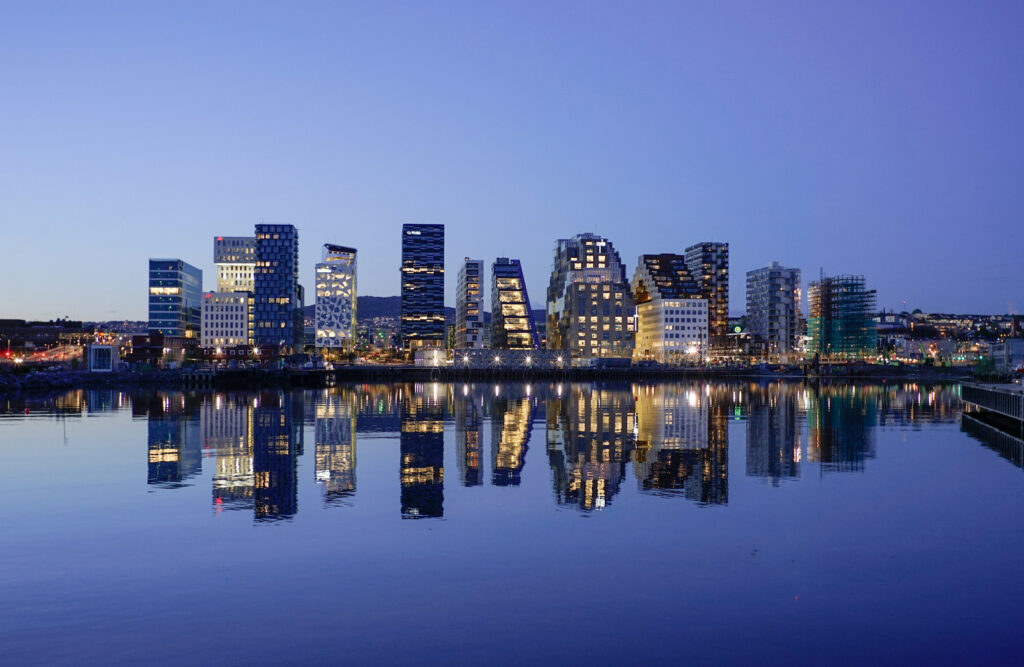
This really put Oslo on the modern architectural map. Here a cluster of 12 thin modern building at varying heights light up the sky. From a distance when glancing from certain angles at the eclectic buildings, you see a slight optical illusion of a barcode. Very intriguing and cool.
Bygdoy Peninsula Museums
On the west side of Oslo, the Bygdøy Peninsula has five national museums: The Viking Ship Museum (Closed & Reopens 2027), the Fram Museum, the Norwegian Folk Museum, the Kon-Tiki Museum and the Norwegian Maritime Museum. The peninsula is also the Royal Summer Residence.
Frogner Park
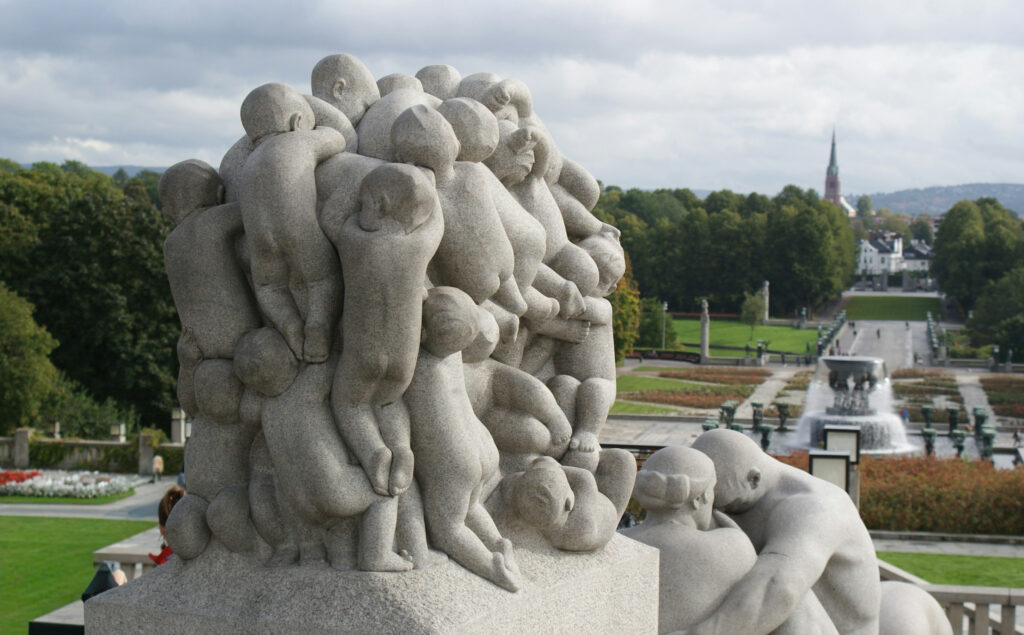
On the west end in the borough of the name is Frogner Park. This unique, free park showcases the works of the 20th century sculptor Gustav Vigeland. Overall, 212 sculptures stand here in bronze and granite from Iddefjord. His works are Realist with a surreal tone. For example, popular works include Angry Boy and the Monlith, a totem comprised of 121 human figures.
Akershus Fortress
On the banks of the Oslofjord, this fortress dates back to the 13th century to protect the city. King Christian IV modernized the fortress and built an Italian Renaissance style palace. The fortress survived many Swedish sieges and later became a prison. Fortress guided tours run on the weekends. Inside the fortress are the Armed Forces Museum and Norway’s Resistance Museum.
Holmenkollbakken Ski Jump
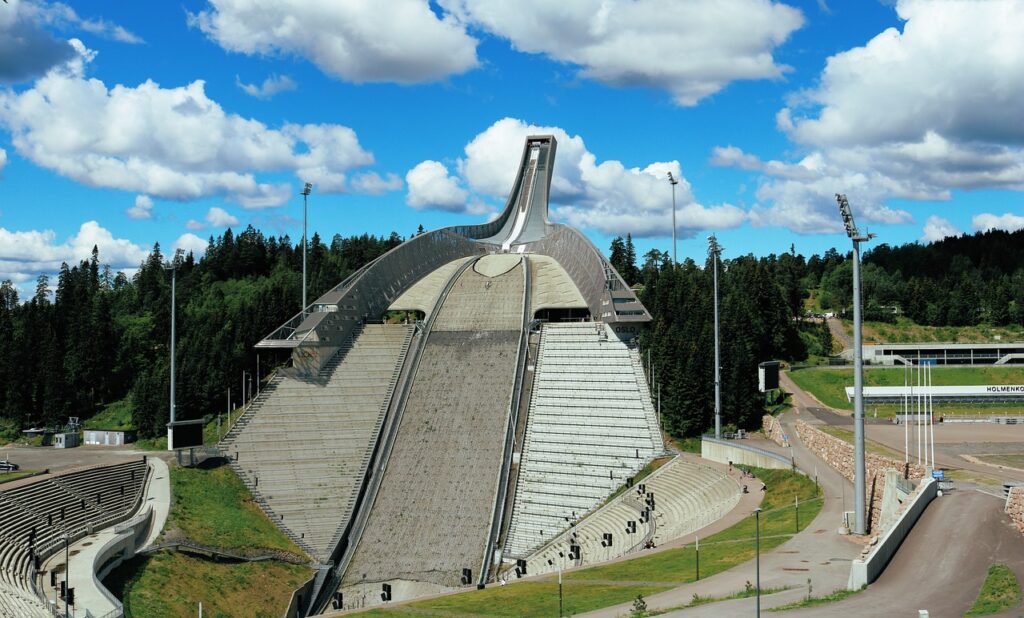
Northwest of Oslo is one of the most famous modern ski jumps in the world. It even offers a Sky Museum. This is an interesting opportunity to learn about the Norwegian ski history. Plus, you can take in the incredible views from the top of Oslo and even its namesake fjord. There is even a simulator to feel what it’s like to take in the views during a ski jump.
Oslo Bergen Train Ride
If your Norway visit starts in Oslo, the next step should be the famous Oslo to Bergen train trip. I did this years ago, before digital photography. The train ride takes about 7 hours. I remember being in awe of the pristine Norwegian countryside and impeccable farms and small towns. FYI, you will not see an unpainted barn in Norway. If you have more time, enjoy stops along the way to see the backcountry of Norway.
Enjoy Oslo!
I have so many good memories of Oslo. It is deeply rooted in fascinating history and culture, alongside breathtaking natural beauty. This is why Oslo is the ultimate gateway to Norway and more. If your travels bring you to Oslo, feel free to leave tips or suggestions below.
Read More on Norway!
The Best of Bergen, Norway’s Nature and Culture Highlights
Magnificent Flam One Day Tour and Flam Railway and Norway’s Steepest Road