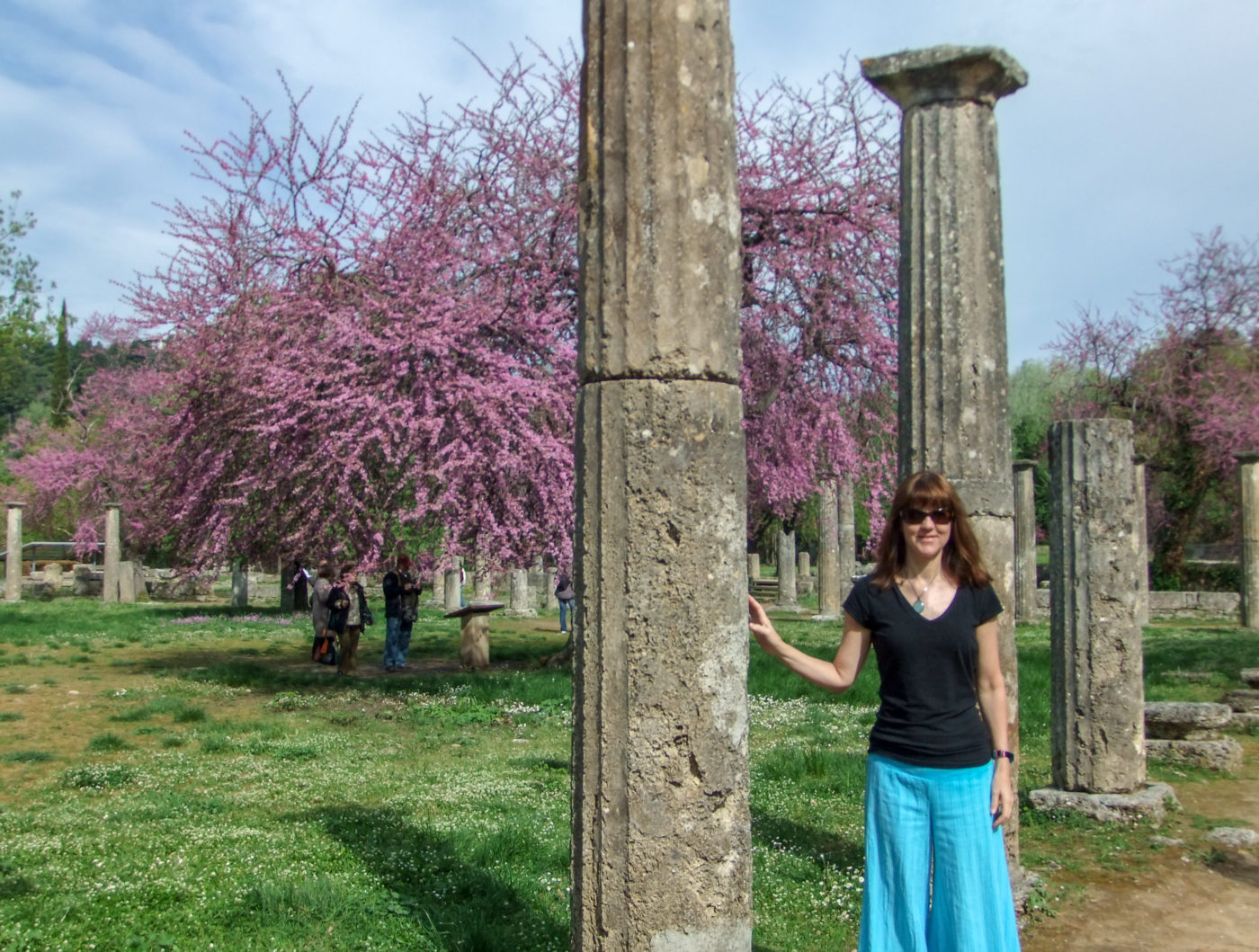
Olympia is one of the most significant archeological sites in Greece. One can easily imagine the original Olympics when wandering among the columns and platforms of these ruins. There still remains enough vestiges and artifacts from the “Birthplace of the Olympics” to go back in time for perspective. I spent a day wandering this marvel amongst the peak of spring bloom. Plus, later I went in summer with the singing cicadas in video below. So, read on to learn about the highlights and why the best time is spring for an Olympia Greece ruins tour.
About Greece’s Original Olympics
Located on the Peloponnese peninsula in Greece, Olympia is where the original Olympic games played out. It lies in the Alfeios River valley, about 18 km from the Ionian Sea. The Olympic Games were held every 4 years for over 1,000 years from the 8th century BC to the 4th century AD. The games encompassed much more than sports. Moreover, they symbolized the peace and nobility of healthy competition, with just the reward of an olive wreath. 1500 years later, the first modern world Olympics began in 1896 in Greece.
Besides the Olympic games, the site also was a significant Panhellenic religious sanctuary of ancient Greece. It was dedicated to Zeus, the father of the 12 Olympian Gods and his consort, Hera. Overall, the archeological site had over 70 buildings, such as, the Temple of Zeus, Temple of Hera, Palaestra and the Philippeion.
In the museums are famous archeological sculptures, like Hermes of Praxiteles and the Nike of Paionios.
Check out my YouTube Video!
Olympia, Greece Ruins Tour
Highlights in Springtime
Train or Bus Between Katakolon and Olympia
DIY Spring Tour
From the cruise port, Katakolon, I went solo on the train 25 miles to Olympia, arriving in 45 minutes. Then, the Olympia Archeological Site is about a 10-minute walking distance from the bus/train. I did not take a tour and just wandered the complex on a spring afternoon in April. (The second time I went on a bus.) Luckily, I arrived during one of the best times, as this is when the wildflowers and Judas trees are in full bloom.
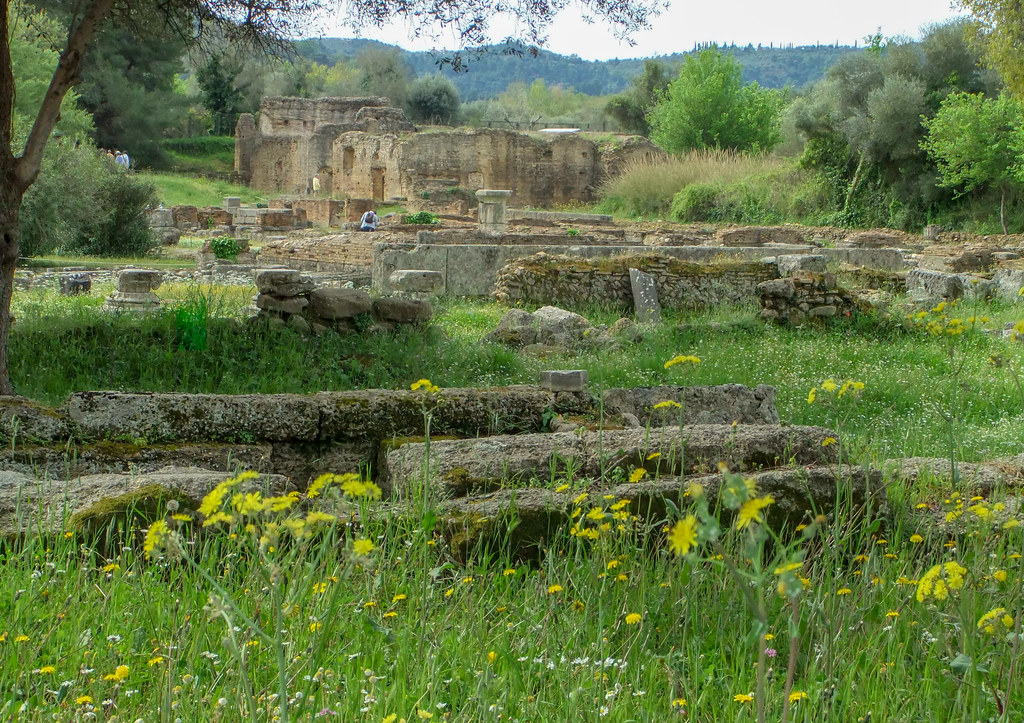
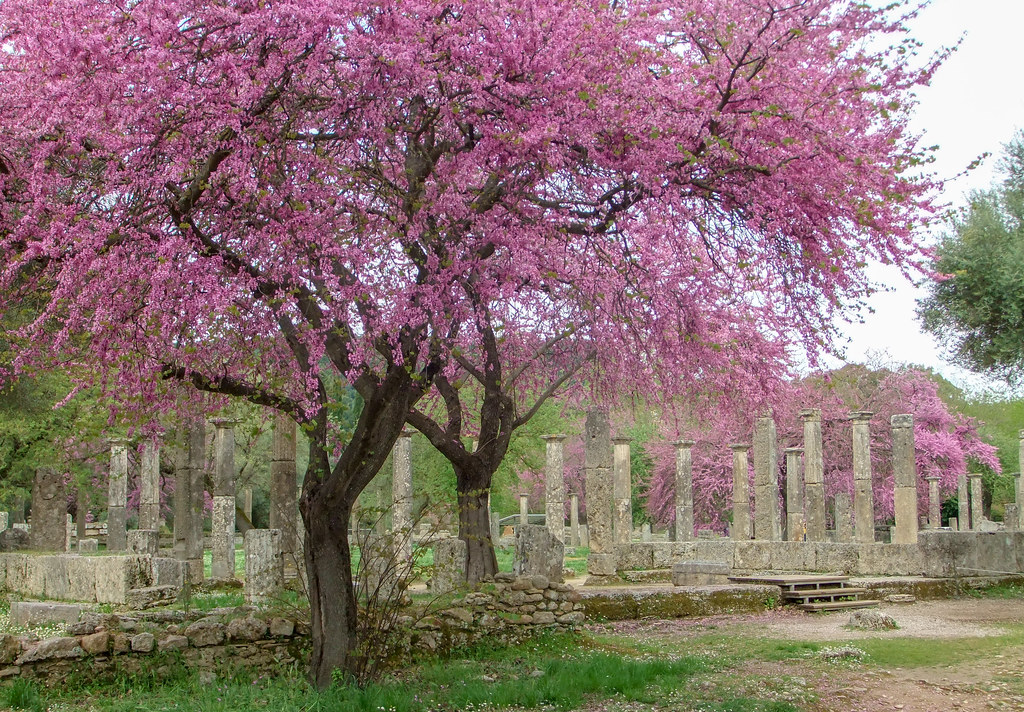
Overall, I was awestruck by the numerous purplish-mauve Judas blooming trees and yellow wildflowers, alongside the remaining stone platforms and Doric columns. In contrast, the new colors of spring illuminated the ancient sacred ruins.
I felt like taking it all in without a tour. It was such a beautiful spring day and it felt fantastic to be in such a historic place at my own pace. Overall, I wandered for at least a couple hours and took amazing photos, displaying the flowers alongside the ruins.
Olympia, Greece Archeological Ruins
Top Sites to See
Palaestra and Gymnasium
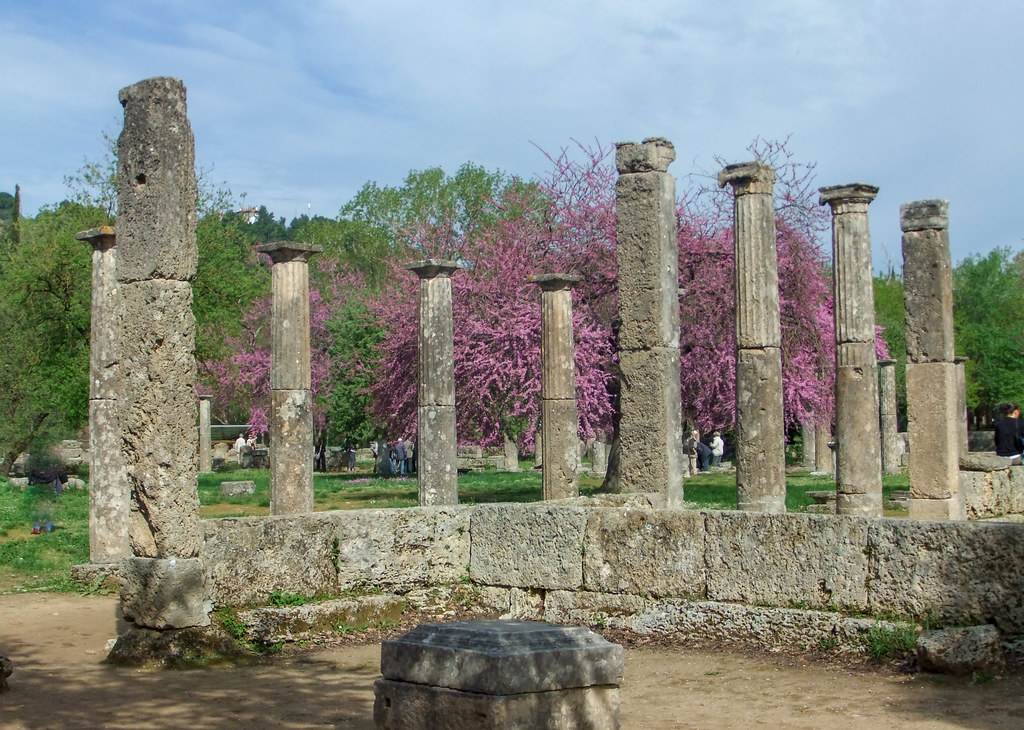
This was one of the first places I explored near the entrance. I observed the most Doric columns here, lined up where the Palaestra (Greek wrestling school) used to be. Overall, this site was used as the gymnasium for wrestling, boxing and jumping. It’s the best location for the beautiful Judas-blooming trees. If you are here in summer, this is a great location for cooling shade.
Philippeion
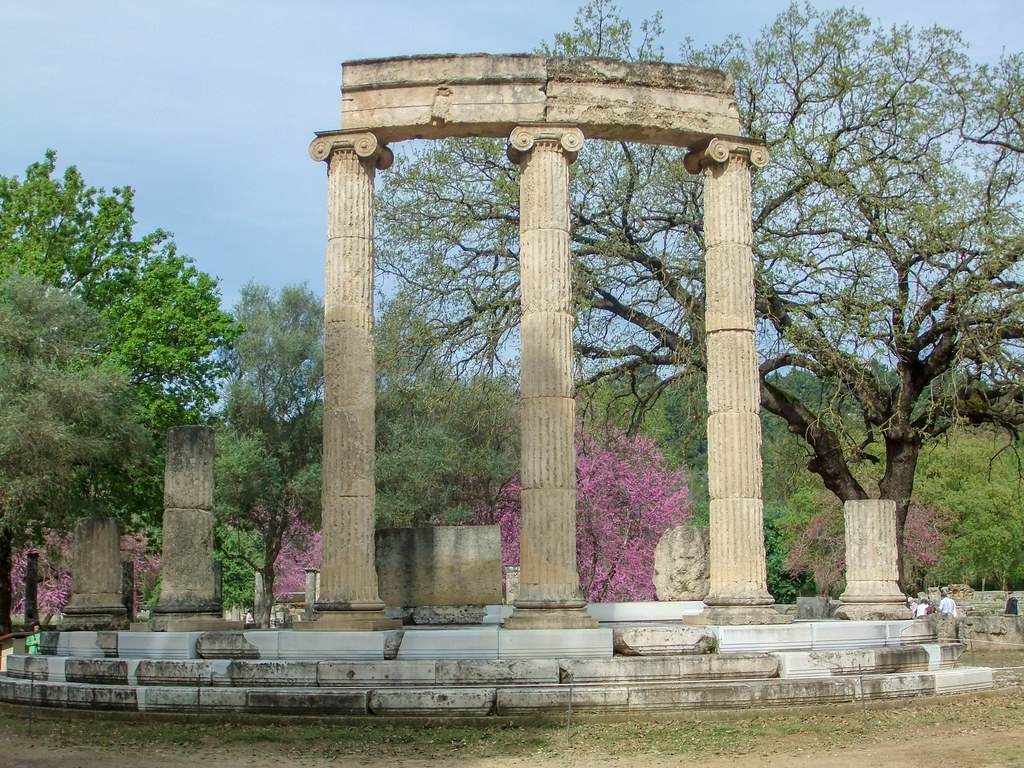
The Philippeion was an Ionic circular memorial in limestone and marble. It was built as a symbol for Philip II of Macedon’s defeating the forces of Classical Greece. Furthermore, Philip built the colossal chryselephantine (ivory and gold) statue of Zeus, sculpted by Pheidias. This sculpture was named one of the Seven Wonders of the Ancient World.
Workshop of Pheidias
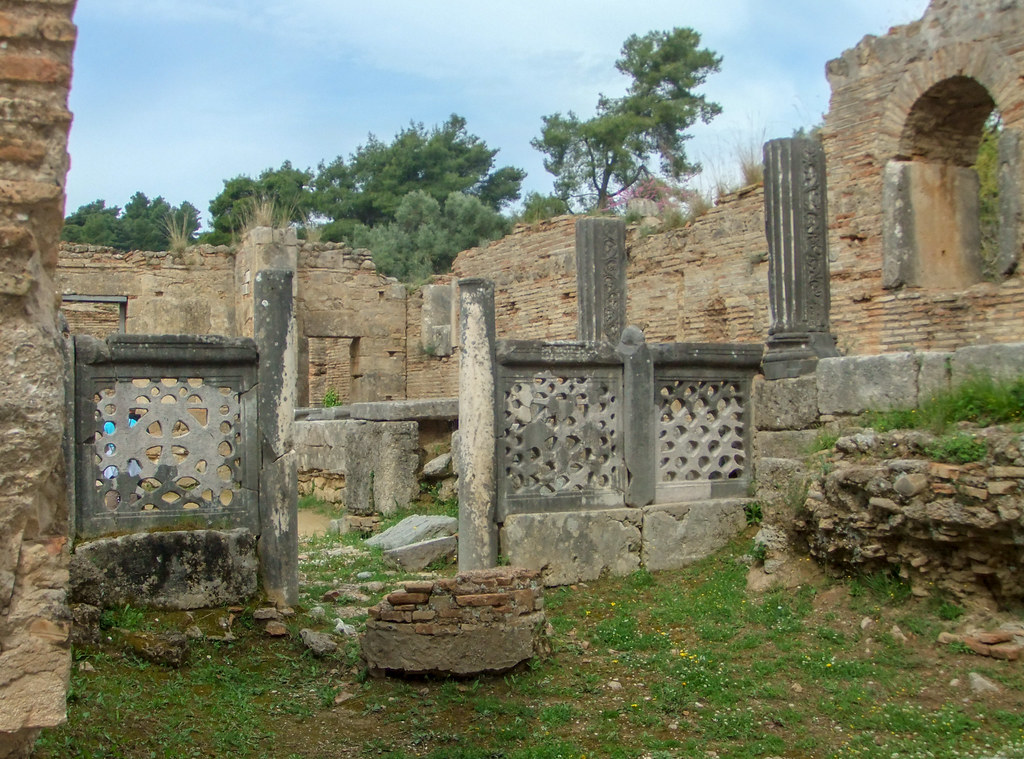
This restored workshop is one of the most important buildings here. It was the workshop of Pheidias, the great sculptor that created the large chryselephantine statue of Zeus for the sanctuary on site. This 13- metre high sculpture of the King of Gods was considered one of the Seven Wonders of the Ancient World.
Stadium at Olympia

A limestone archway and vaulted tunnel welcomes you to the vestiges of the historic stadium. It’s awesome to walk out on the field and imagine the pandemonium from 45,000 spectators. Greek athletic events happened here, such as, running and chariot races. Many tourists run the open field here to reenact history.
Sanctuary of Zeus and Hera
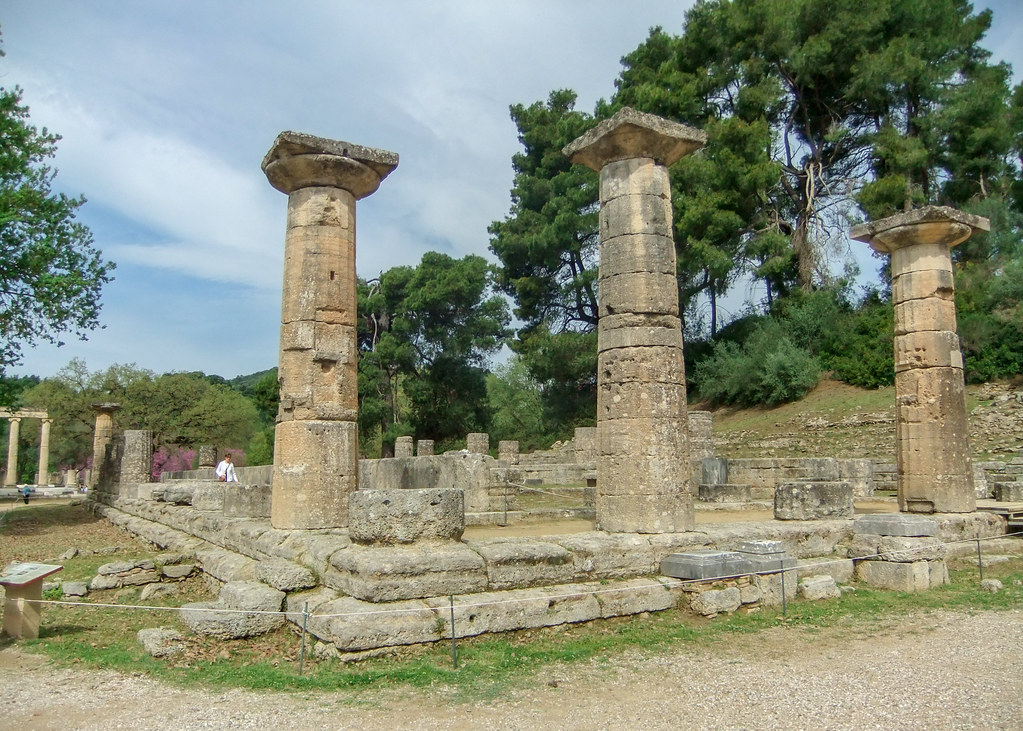
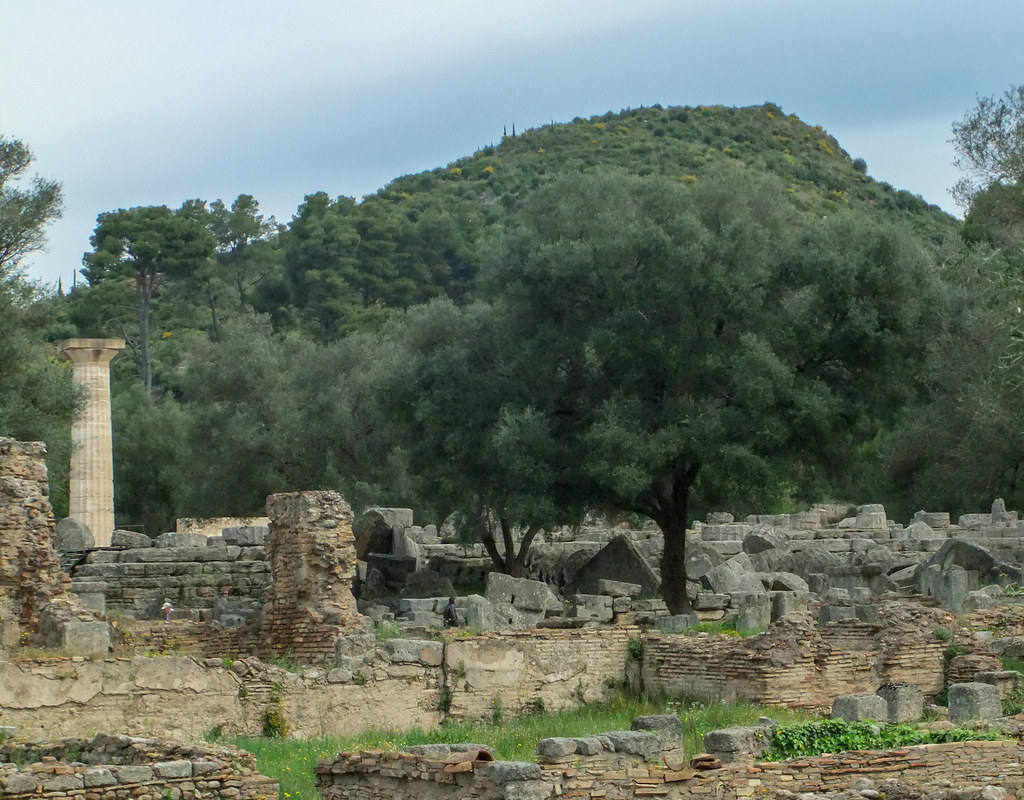
Near the stadium is the Sanctuary of Zeus, the father of the 12 Olympian Gods. This sacred site dates back to the 10th century BC. Many Greek citizens made pilgrimages here to honor Zeus, the King of Gods. The sanctuary was in the sacred Grove called Altis. On the great altar of Zeus sacrifices were made. Today, just one Doric column remains, but you can still feel the history. Don’t miss the workshop on site, where the sculptor, Pheidias created the statue.
Nearby is a temple for his consort, Hera. This temple is a more intact with 3 column among a platform and stones.
Olympia Museums

Archeological Museum
This is one of the best museums in Greece with findings from the ancient site and the area. It includes famous statues, such as, Nike Paionios and Hermes of Praxiteles
Museum of the History of Olympic Games
Located inside the Archeological Museum, this displays everything to do with the Olympic games and events.

Enjoy Olympia Greece!
This is one of my favorite tours exploring an archeological site. And it was being there during spring bloom that made it extra special. The symbolic juxtaposition of the old and new tells the deeper story regarding cycles of life. From ancient relics of the past, come the rebirth for creative evolution. If your travels bring you to Olympia, feel free to leave tips in the comments below.
Read More!
Ancient Pompeii Sightseeing Guide and Ten Points of Interest
Fascinating Valletta, Malta’s Must-See Attractions